Find the right welder for you
Take our product quiz to find out what welder will meet your needs.

Take our product quiz to find out what welder will meet your needs.
Battery tab welding, often referred to as battery tab spot welding, is the process of attaching thin metal tabs to battery cell terminals so the cells can be connected into packs, modules, or finished battery assemblies. In most production environments, the goal is to create a strong electrical and mechanical connection without overheating or damaging the cell.
For this application, the most common use case is welding nickel battery tabs to cylindrical cells. This is a strong fit for Sunstone’s CD Dual Pulse welding systems, especially the CD200, CD400, CD600, and CD1200. These systems function as highly controlled battery tab welding machines, delivering precise energy output for repeatable weld quality.
They are typically paired with either:
In general:
Nickel, nickel-coated steel, and many clad tab materials are well suited for CD battery tab welding. Around 0.005" nickel remains one of the most common and easiest materials to weld successfully using battery tab spot welding techniques.
As tab thickness increases beyond about 0.010", tab design becomes more important. Features like dimples and slits are often required to improve weldability and ensure proper energy concentration.
For copper tab welding from 0.010" to 0.020" thick, the recommended solution is the Sunstone PA250i OMEGA, which is specifically designed to handle the higher conductivity and heat dissipation challenges associated with copper.
This is the most common battery tab welding application. Manufacturers use battery tab spot welding to attach pure nickel tabs to the positive or negative ends of cylindrical cells, enabling the construction of battery packs for portable electronics, tools, medical devices, mobility products, and industrial systems.
Typical details include consistent tab placement, controlled weld energy, and minimal heat input to avoid internal cell damage. Because this process is highly repeatable, it is widely used in both prototyping and scaled production environments.
As battery designs evolve, manufacturers often need to weld thicker nickel tabs or transition to alternative materials such as nickel-coated steel or copper. These applications require more precise control over energy delivery and weld geometry.
Battery tab welding machines like Sunstone’s CD Dual Pulse systems allow operators to fine-tune weld parameters, making it possible to handle increased material thickness while maintaining weld integrity. In more advanced cases, engineered tab designs—such as slotted or dimpled tabs—are used to improve consistency and reduce required weld energy.
Copper presents a greater challenge in battery tab welding due to its high electrical and thermal conductivity. Standard CD welding systems are often not sufficient for thicker copper tabs, especially in the 0.010"–0.020" range.
For these applications, the PA250i OMEGA provides a specialized solution. It is designed specifically for copper battery tab welding, allowing manufacturers to achieve strong, repeatable welds where traditional battery tab spot welding methods may struggle.
What are you welding today?
Talk with our team about the right solution for your battery tab welding application.
Battery tab welding is not just about joining materials—it is about doing so without compromising the internal structure of the cell. Excessive heat can damage internal components, reduce battery life, or create safety risks.
This is why battery tab spot welding is preferred in many applications. The process delivers energy in a controlled, localized manner, minimizing heat spread while still creating a strong bond.
Operators must balance several variables, including:
When properly controlled, battery tab welding produces consistent, high-quality connections that meet both electrical and mechanical requirements.
Selecting the right system depends on material, thickness, and production requirements. While many systems can perform basic battery tab welding, not all are optimized for repeatability or material range.
Sunstone’s CD Dual Pulse welders are widely used as battery tab welding machines because they provide:
For more demanding applications, such as copper tab welding, specialized systems like the PA250i OMEGA are required to achieve consistent results.
Even in controlled environments, manufacturers encounter challenges that can impact weld quality and consistency.
One of the most common issues is excessive heat input, which can damage battery cells or weaken the weld. This is especially problematic when using incorrect settings or equipment not designed for thin materials.
Material variability also plays a role. Differences in plating, thickness, or surface condition can affect weld performance, requiring adjustments to process parameters.
In higher-volume environments, consistency becomes critical. Without proper fixturing or weld head alignment, even small variations can lead to inconsistent welds across a batch.
These challenges are why many manufacturers rely on purpose-built battery tab welding machines and validated welding processes rather than general-purpose equipment.
Battery tab welding is the general process of attaching tabs to battery cells, while battery tab spot welding refers specifically to the resistance welding method most commonly used for this application.
Laser welding can be used in certain applications, particularly for specialized materials or automation environments, but battery tab spot welding remains more common due to cost, simplicity, and reliability.
A dedicated system is recommended when consistency, repeatability, and material control are critical—especially in production environments or when working with thicker tabs or copper materials.
What are you welding today?
Connect with our team for help choosing the best welder for your battery tab welding application.
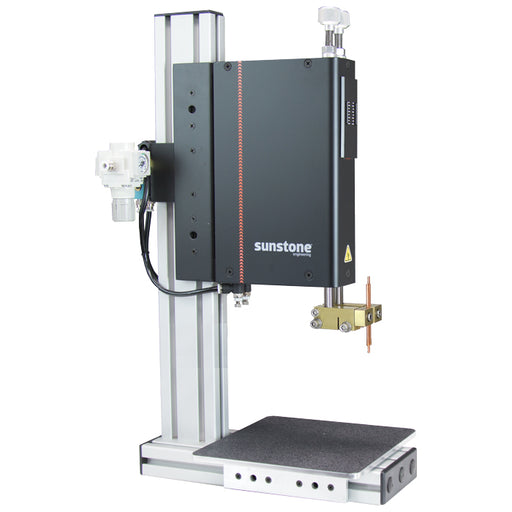
Parallel Weld Head The WH2 pneumatic parallel weld heads offer precision and repeatability at an affordable price. The WH2 weld heads offer paralle...
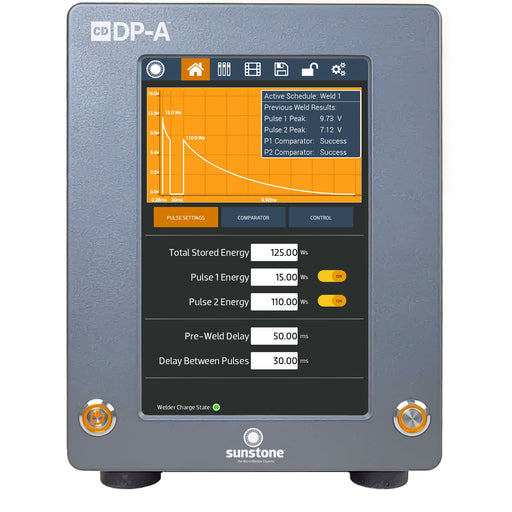
View full detailsCapacitive Discharge Spot Welder for Battery Tab Welding The CDDP-A is a dual pulse capacitive discharge spot welder designed for precision joining...
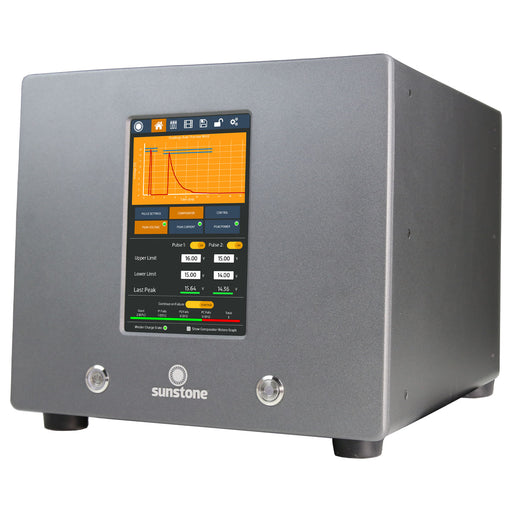
View full detailsADVANCED FINE-SPOT RESISTANCE WELDERS Capacitive Discharge (CD) resistance welders have many advantages over other welder types. Since CD welders u...
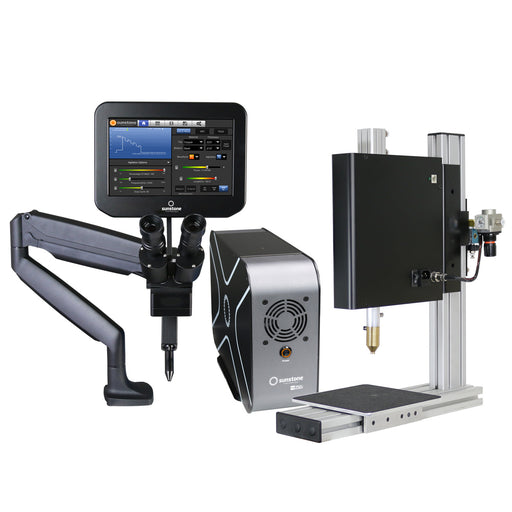
View full detailsOmega PA250i Welding System The Case for Copper One of the biggest challenges when welding EV batteries is finding a welder capable of welding hi...
View full details