Find the right welder for you
Take our product quiz to find out what welder will meet your needs.

Take our product quiz to find out what welder will meet your needs.
Filtration and mesh welding involves joining fine metal screens, woven wire meshes, and perforated materials used in filtration systems. These components are commonly found in medical devices, aerospace, food processing, water treatment, and industrial manufacturing.
Customers in this space often need to join mesh to frames, rings, or housings; seam weld mesh edges to create sealed filters; reinforce or repair delicate mesh structures; and maintain flow characteristics without clogging or distortion.
The challenge is achieving strong, consistent welds without damaging thin wires, altering pore size, or introducing contamination.
Talk to an Application Engineer
Get help evaluating the best welding process for your mesh structure, frame design, seam requirement, and filtration performance goals.
Filtration and mesh welding is the process of welding fine metal screens, woven wire mesh, or perforated materials into filtration components. In many cases, the mesh must be attached to a frame, ring, housing, or seam while preserving the structure and performance of the filter.
Unlike general wire mesh welding, filtration mesh welding requires careful process control because the mesh itself affects the function of the finished component. Weld quality matters, but so does maintaining flow, pore consistency, cleanliness, and dimensional stability.
This makes process selection important. Some applications require a continuous seam to prevent bypass or leakage, while others only need non-sealed retention to hold the mesh in place.
Filtration and mesh welding is a strong fit when you need to join fine mesh or perforated material without compromising filter performance. The right process depends on the assembly design, material type, weld requirement, and whether the application calls for a sealed seam or non-sealed retention.
Common application needs include:
For filtration assemblies, weld performance is not just about attachment strength. The weld also affects flow, sealing, pore consistency, cleanliness, and long-term function.
Fine mesh and filtration components can be difficult to weld because the material is thin, delicate, and easily affected by excess heat or uneven weld distribution. Customers often need secure attachment while still preserving the filter’s geometry and performance.
The main risks include burning through fine wires, altering pore size, clogging the filter surface, distorting the mesh, introducing contamination, or leaving gaps that allow bypass or leakage.
These challenges are especially important when mesh must be welded to a frame, ring, housing, or cylindrical seam while maintaining consistent performance across the finished filtration assembly.
Need help choosing the right mesh welding approach?
Talk with our team about whether your filter assembly needs a hermetic seam, non-sealed retention, or a continuous cylindrical weld.
Mesh-to-frame welding is used when fine mesh must be attached to a rigid frame, ring, or housing to create a filtration assembly. This is common in filter cartridges, screens, and framed mesh components.
Typical materials include stainless steel mesh in the 100–400 mesh range and stainless frames. The weld type may be a continuous seam or roll spot weld, depending on the application requirements.
The key requirement is even weld distribution without burning through fine wires. For hermetic seams, WAVE AC is the best fit. For non-sealed retention, CD welders are a good fit.
Cylindrical filter seam welding is used when rolled mesh must be joined along the edge to maintain shape and structural integrity. In these applications, mesh is rolled into a tube and seam welded along the cylinder edge.
Typical materials include rolled stainless steel mesh and nickel alloys. The weld type is a continuous seam along the cylinder edge.
The requirement is a smooth, continuous weld that prevents bypass or leakage. For true seam welding, the best fit is WAVE AC with a wheel electrode.
The best welding approach depends on whether the filtration assembly requires a hermetic seam, non-sealed retention, or a continuous cylindrical seam.
WAVE AC is the best fit for hermetic seams and true seam welding, especially when the weld must help prevent bypass or leakage. For cylindrical filters, WAVE AC with a wheel electrode is the best fit for true seam welding.
CD welders are a good fit for non-sealed retention, where the goal is to hold the mesh to a frame, ring, or housing without requiring a fully sealed seam.
The goal is to match the welding process to the filtration requirement while protecting the mesh structure and maintaining the filter’s intended flow characteristics.
Filtration and mesh welding helps manufacturers create, repair, or reinforce mesh-based filtration assemblies where traditional joining methods may compromise the material or the finished filter.
It is used when customers need to attach mesh to frames, create sealed edges, maintain cylindrical filter integrity, or repair delicate mesh structures. It is especially important when the finished component must maintain flow characteristics, avoid clogging or distortion, and prevent bypass or leakage.
If your application involves fine metal screens, woven wire mesh, perforated materials, mesh-to-frame welding, or cylindrical filter seam welding, Sunstone can help evaluate the best process for your requirements.
The right solution depends on the material, mesh structure, weld type, and whether the application requires a sealed seam or non-sealed retention.
Filtration and mesh welding is the process of joining fine metal screens, woven wire meshes, and perforated materials used in filtration systems. These materials may be welded to frames, rings, housings, or seams to create filtration assemblies.
In filtration applications, wire mesh welding is used to attach mesh to frames, rings, or housings; seam weld mesh edges; reinforce or repair delicate mesh structures; and help maintain the shape and function of filtration components.
The challenge is achieving strong, consistent welds without damaging thin wires, altering pore size, clogging or distorting the mesh, or introducing contamination.
Mesh-to-frame welding joins fine mesh to a rigid frame, ring, or housing to create a filtration assembly. It is commonly used for filter cartridges, screens, and framed mesh components.
Cylindrical filter seam welding is used when mesh is rolled into a tube and welded along the cylinder edge. The goal is to create a smooth, continuous weld that helps maintain shape and prevent bypass or leakage.
For hermetic seams, WAVE AC is the best fit based on the application requirements provided.
For non-sealed retention, CD welders are a good fit.
For true seam welding on cylindrical filters, WAVE AC with a wheel electrode is the best fit.
Build Stronger Filtration Assemblies Without Compromising Mesh Performance
Join fine screens, woven wire mesh, and perforated materials while protecting flow characteristics, pore size, and filter integrity.
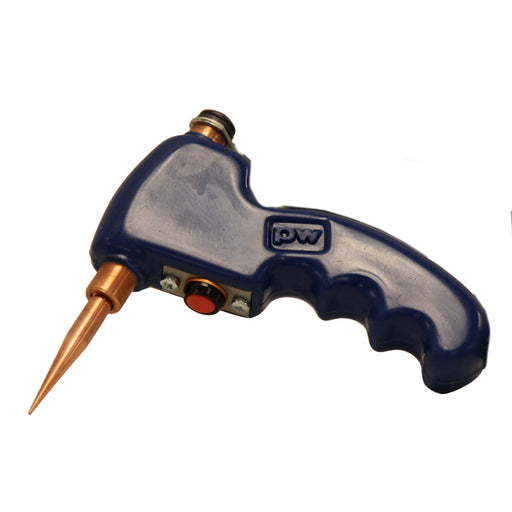
Pistol Grip Hand Piece with Button Trigger. Accepts threaded electrodes. Can be used as a single probe or roll spot. Cables: 1 AWG Weight: 5 lb / 2...
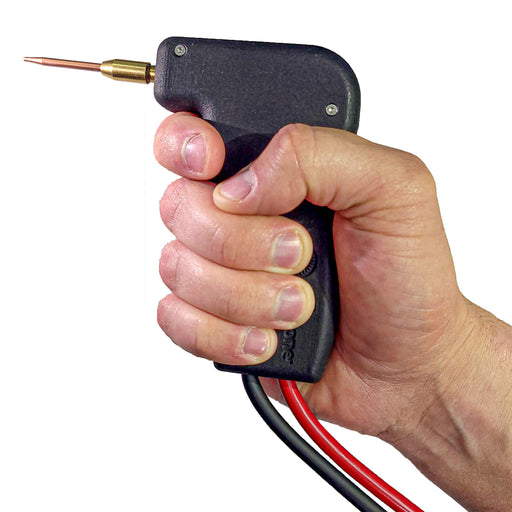
View full detailsThe Sunstone Mini Grip Key Features Smaller size and weight reduces operator fatigue Accepts any 1/8" electrode Standard collet electrode syste...
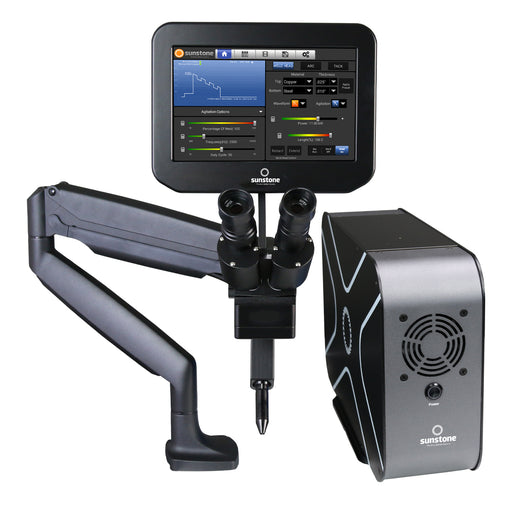
View full detailsPA250i Micro TIG Welder Maximum Power!The most powerful Sunstone pulse arc welder delivers 250 joules of energy with precision and accuracy When yo...
View full details